A shared ownership valuation gives an independent market value for your whole home when you are staircasing (buying a bigger share), selling, or completing another transaction your housing association or landlord asks for. That value is then used to work out the price of the share being bought or sold.
Sterlingworth Surveyors is a RICS-regulated firm (Firm Registration Number 850747) based in Chessington. Our RICS shared ownership valuations are prepared in line with RICS Valuation – Global Standards (the Red Book), using current market evidence and the specific requirements your housing association or landlord sets for the instruction.
It is a formal valuation report, prepared by a RICS valuer, that states the market value of a shared ownership property as a whole. Because you own part of the home and your housing association or landlord owns the rest, both sides need an impartial figure before a share changes hands.
The report values the full property, not your share. Your housing association or landlord then applies the percentage being bought or sold to that figure, following the terms of your lease.
Government guidance says that staircasing (apart from the small annual steps some newer leases allow) and selling your share both need a valuation by a surveyor registered with RICS, so a free estate agent’s appraisal is not a substitute. Your housing association or landlord will confirm exactly what it needs, including whether it arranges the valuation or you do, before you instruct anyone.

You are likely to need one when a share in the property is about to change hands. The most common situations are:
If you are not sure whether your situation needs a valuation, ask your housing association or landlord first. They will confirm whether one is required and what it must cover.

Staircasing is the process of buying further shares in your shared ownership home from your housing association or landlord. Each step increases the share you own and reduces the rent you pay on the share you do not own. Most homes allow you to staircase to 100%, at which point you own the home outright, although some leases cap the share you can own, for example in designated protected areas.
The price of each new share is normally based on the property’s market value at the time you staircase, not the value when you first bought. Any rise or fall in value since you first bought is reflected in the price of the new share.
That depends on your lease. Older leases often set a minimum share for each step. Some newer leases also allow much smaller steps, in some cases as little as 1%, and the price for those small steps may be worked out differently, without a full valuation. Your housing association or landlord will confirm which rules apply to your lease.

In most cases, yes. Government guidance says that when you staircase you need a valuation by a surveyor registered with RICS, because the price of the new share depends on what your home is worth at the time. The exception is the small annual steps some newer leases allow, where the price is worked out from the original price and the House Price Index instead.
Contact your housing association or landlord. Tell them you want to staircase and ask for their current requirements, including who should instruct the valuer and how long a valuation stays valid. The checklist below covers the questions to ask.
Instruct a RICS valuer. Share your landlord’s requirements, lease details and any improvements you have made.
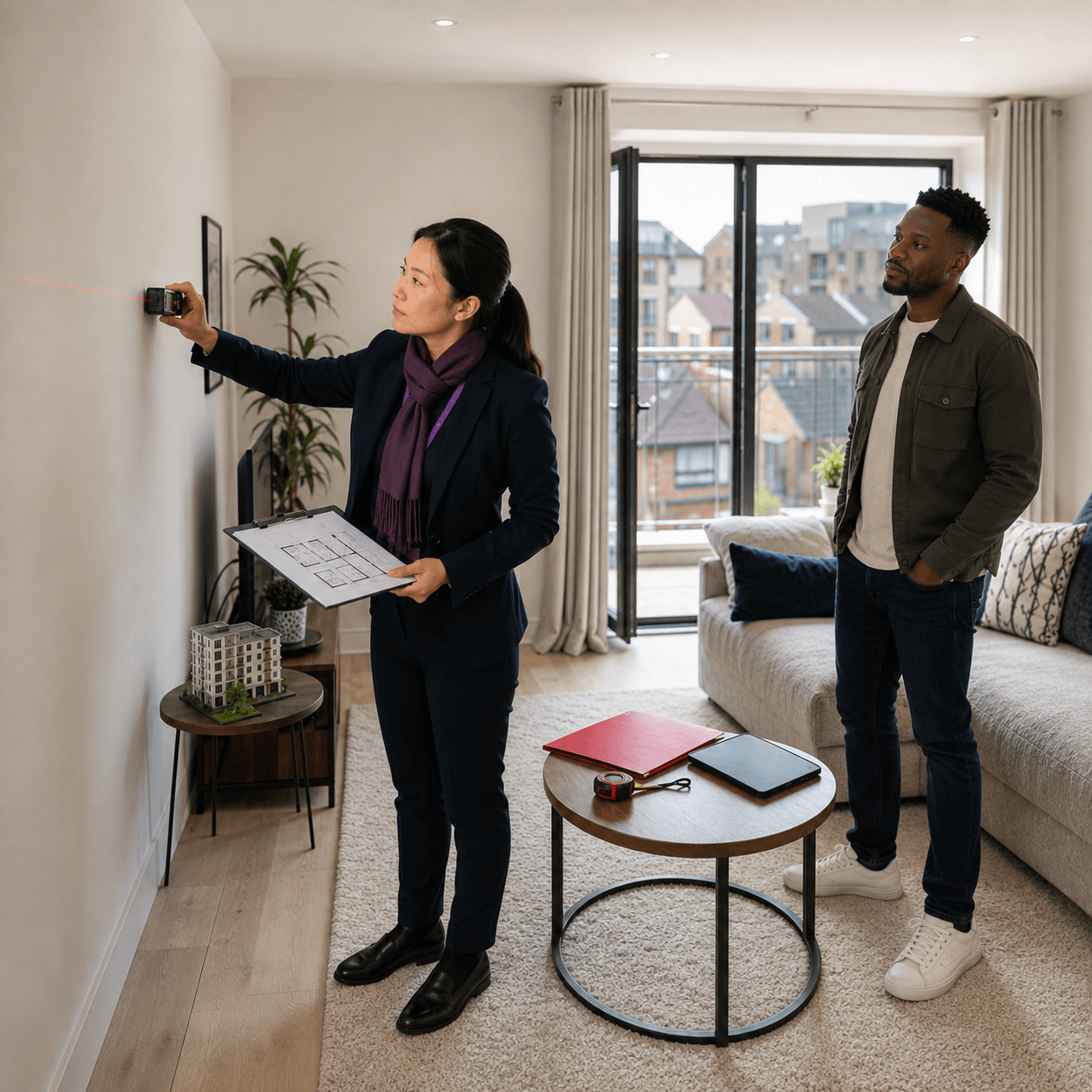
Inspection. The valuer visits the property to record its size, layout, condition, features and location.
Market evidence. The valuer researches comparable sales and current market conditions, and weighs how each comparable differs from your home.
Valuation report. You receive a formal report stating the market value and the reasoning behind it, prepared to meet your landlord’s stated requirements.
Submit and proceed. You send the report to your housing association or landlord, which confirms the price of the share. Your solicitor then deals with the legal side of buying it.
The share usually has to be bought within a set period of the valuation date. If that period runs out first, the home will need to be valued again. We can advise on this, including a reinspection where one is needed.
A shared ownership property valuation looks at the home as if it were being sold in full on the open market.
Size, layout, condition, outside space, parking and the development it sits in. For flats, the valuer also considers the lease length and service charge arrangements, which can affect value.
Recent sales of similar homes nearby are the main evidence. The valuer adjusts for differences in size, condition, specification and position, and where evidence is limited, the report explains how the figure has been reached.
It depends on whether your landlord approved them. Government guidance says that if your landlord gave permission for improvements you made, such as a new kitchen or an extension, the price of a new share is based on the home’s value without them; otherwise it is based on the current market value. The valuer may be asked to report the value with and without those improvements. Your housing association or landlord will tell you what evidence it needs, so tell us about any improvements before the inspection.
Only for a limited time. When you staircase, the share usually has to be bought within a set period of the valuation date, and if that period runs out first, the home will need to be valued again. Check the period that applies with your housing association or landlord before booking, and start the valuation when you are ready to proceed.
Your lease and your housing association or landlord’s written guidance apply to your own transaction, so check anything on this page against them.
If you are selling your share, you will need a valuation by a surveyor registered with RICS. Your housing association or landlord has a period to find a buyer before you can market the home more widely. How long that period lasts depends on your lease, so your housing association or landlord will confirm the process.
If you have already staircased to 100%, you can usually sell the home on the open market like any other property. Some leases in designated protected areas require the home to be sold back to the landlord or to a buyer it arranges instead.
The fee depends on the property and the service you need. Tell us about the home and what your housing association or landlord requires, and we will confirm our fee before you instruct us.
Last updated
Government guidance says the valuation must be by a surveyor registered with RICS. Your housing association or landlord decides whether it arranges the valuation or asks you to, and some keep a list of valuers they use. Your housing association or landlord will confirm its requirements before you book.
For a limited time. When you staircase, the share usually has to be bought within a set period of the valuation date, and if that period runs out first, the home will need to be valued again. Check the period with your housing association or landlord first, and book the valuation when you are ready to go ahead.
Not for staircasing or selling a share. Government guidance says you need a valuation by a surveyor registered with RICS, because the figure is used to work out the price of the share. The only exception is the small annual steps some newer leases allow, which do not need a valuation at all.
The report gives the market value of the whole property. Your housing association or landlord then applies the percentage you are buying or selling to that figure, under the terms of your lease, to work out the price of the share.
Speak to your housing association or landlord first, as their process applies. If you have evidence the valuer may not have seen, such as recent comparable sales or details of improvements, you can ask for it to be considered. Any further steps, such as a second valuation, depend on your housing association or landlord’s policy.
Only if your lease allows it. Some newer shared ownership leases permit small staircasing steps, in some cases 1% at a time, and the price may be worked out without a full valuation. Older leases usually set a larger minimum share. Your housing association or landlord will confirm what your lease allows.
No. Shared ownership means buying a share of the home from a housing association or landlord. Help to Buy was an equity loan, and its valuation relates to repaying that loan. The approach to valuing the property is similar, but the scheme rules are different. See our Help to Buy valuations page if you have an equity loan.
Once you have your housing association or landlord’s requirements, tell us about the property and what the valuation is for, and we will confirm the scope and fee before you instruct us.
If you bought with a Help to Buy equity loan instead, see our Help to Buy valuations. Council tenants, and some housing association tenants whose homes used to belong to the council, buying under the Right to Buy scheme can read about our Right to Buy valuations, and all our residential valuation services are in one place.


