When you are buying a house, shaking hands on an agreed price feels like the end of the battle. But an initial offer is rarely the final price you pay.
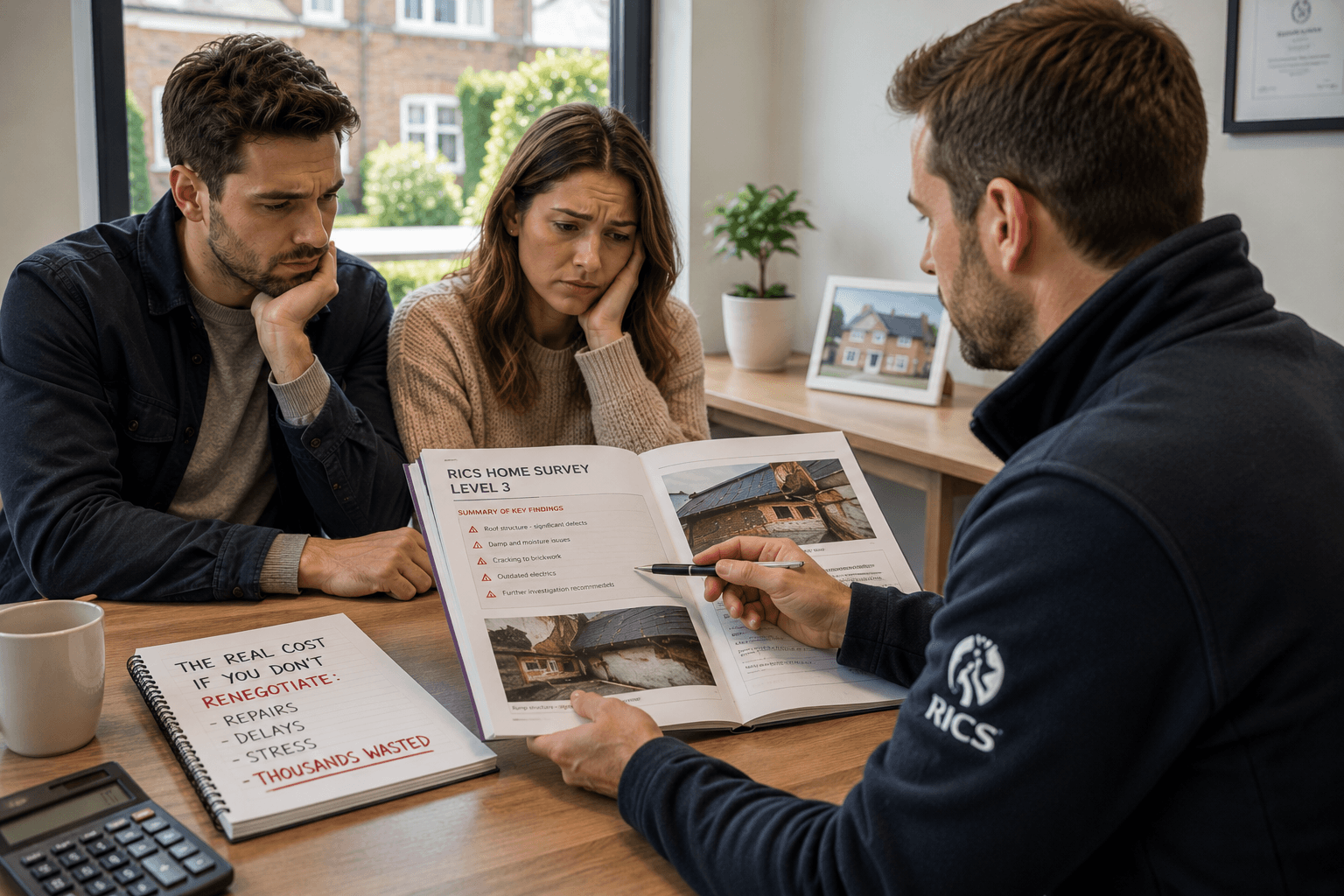
In the UK house buying process, the period between having your offer accepted and the survey before exchange is where the real money is saved. If your independent RICS survey uncovers hidden defects like a leaking roof, damp, or structural movement you are in a prime position to renegotiate.
Many buyers, especially a first-time buyer, feel uncomfortable asking for a discount. They worry the seller will walk away. But property negotiation isn’t rude; it is standard business.
Here is your step-by-step guide on how to negotiate a house price after a survey, protect your budget, and buy with confidence.
Know Your Leverage: The “Before Exchange” Rule
The most important thing to remember when buying a house is that until you exchange contracts, you hold all the power.
You are under no legal obligation to proceed, and your deposit is safe. If you find £5,000 worth of rot in the roof timbers, you have the absolute right to say, “I am not signing these papers unless the price drops or this is fixed.” If the seller refuses and the sale falls through, they have to put the house back on the market, wait months for a new buyer, and they may need to share what they now know about the property with future buyers. They want to keep you on the hook.
Get Hard Evidence
You cannot call the estate agent and say, “The house feels a bit damp, can I have £3,000 off?” They will laugh you off the phone.
Instead, use your official Sterlingworth RICS survey report as your evidence. It is an independent, legally robust document. If the report highlights a defect:
-
Get two independent quotes from local tradespeople to find out exactly how much it costs to fix.
-
Use those exact figures as the basis for your price reduction.
How to Deal with the Estate Agent
Remember: the estate agent works for the seller, not you. Their job is to keep the deal alive at the highest possible price.
When you negotiate, stay calm, polite, and completely factual. Frame the price reduction around the survey findings and the repair quotes you have obtained.
💬 Negotiation conversation example:
“Hi Estate agent, we’ve received our independent RICS survey report back, and while we love the house and want to proceed, the surveyor has highlighted an urgent issue with penetrating damp in the kitchen walls. We have obtained quotes, and the repair is estimated at £4,200. To ensure we have the funds to make the property safe upon completion, we would like to adjust our final purchase price to £250,000 rather than the original £254,200. We are ready to exchange contracts immediately once this amendment is accepted.”
“Oh? Okay, yes that makes sense let me have a chat with the seller then. You did your homework…”
The 3 Outcomes: What to Expect
When you propose a lower price, the seller will usually respond in one of three ways:
-
They Accept the Reduction: The cleanest outcome. Your solicitor updates the paperwork with the new price, and you move forward to exchange.
-
They Offer to Fix It Themselves: Be careful here. If the seller fixes it, they might hire the cheapest possible builder to do a quick cosmetic patch job. Demand to see receipts, guarantees, and proof of professional trade accreditation before agreeing.
-
They Meet You in the Middle: If they split the difference, calculate whether your emergency budget can cover the remainder.
Don’t let the fear of an awkward conversation stop you from protecting your bank account. Avoid hidden defects, stick to the facts, and never exchange contracts on a property that is costing you more than it is truly worth.
Frequently Asked Questions
1. Is it normal to lower your offer after a survey?
Yes. Renegotiating after a survey is common. Sellers expect it, and estate agents are fully prepared to handle the conversation.
2. Can a seller pull out if I try to negotiate the price?
Technically, yes. Until the exchange of contracts, either party can walk away from the sale. However, sellers rarely pull out over a reasonable, evidence-backed negotiation because restarting the entire selling process from scratch costs them significant time and money.
3. Should I ask for a price drop or ask the seller to repair the issue?
It is almost always better to ask for a price reduction. This gives you complete control over which contractors are hired and ensures the repair work is carried out to a high standard, rather than relying on a seller who is trying to cut corners before leaving.
Now you know exactly how to renegotiate, the question is now; have you got the survey?
If the answer is no then don’t delay any further, let’s book you in now.
Further reading: Who organises a home survey when buying a house? · The step-by-step UK house buying guide