Spray foam insulation has grown in popularity as a way to improve energy efficiency in homes. However, recent headlines have highlighted significant risks associated with its installation—risks that can impact homeowners’ ability to sell, remortgage, or even maintain their properties. At Sterlingworth Surveyors, we aim to shed light on this issue, helping homeowners make informed decisions.
What Is Spray Foam Insulation?
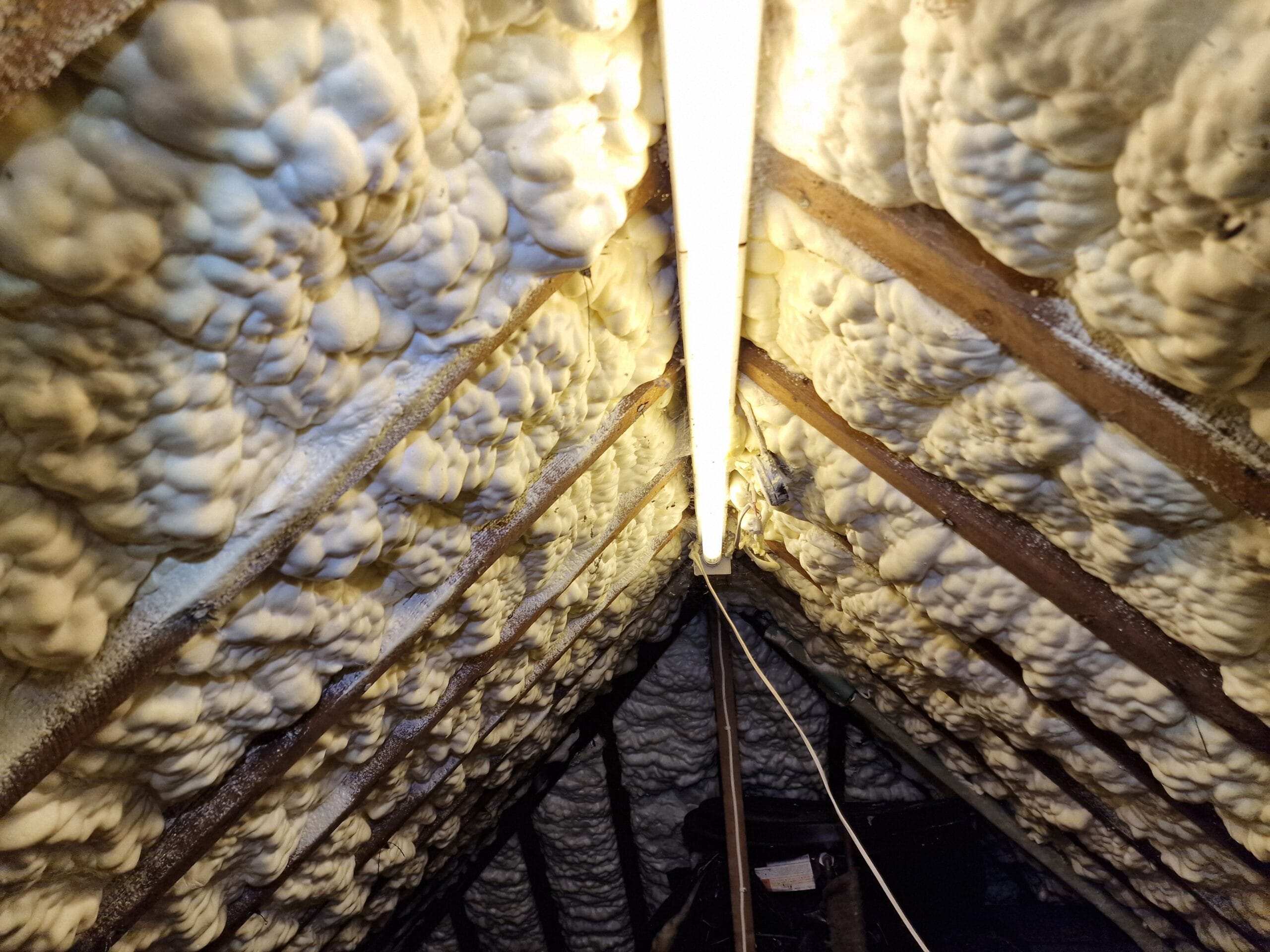
Spray foam insulation is made from liquid polyurethane that expands into a foam, creating an airtight seal. This material can be highly effective at reducing heat loss, lowering energy bills, and improving overall comfort in homes.
There are two types:
Open-Cell Foam: Lightweight, flexible, and breathable, this type is typically used in spaces where ventilation isn’t an issue.
Closed-Cell Foam: Dense and rigid, it offers better insulation but may trap moisture, leading to potential structural issues if not applied correctly.
While the benefits of spray foam insulation are well-documented, the method and quality of installation are crucial. Poor installations can lead to significant issues, as detailed below.
Why Is Spray Foam Insulation Controversial?
- Structural Risks and Moisture Problems
When improperly installed, spray foam can trap moisture, leading to condensation and decay. Research published by the Health and Safety Executive in 2024 predicted that around 25% of timber could decay within five years where open-cell spray foam is applied to a bitumen felt underlay. Bitumen felt underlays are common in older roofs.
Three major installation problems are commonly identified:
- Spray foam installed over existing loft floor insulation, increasing the risk of condensation.
- Foam applied to non-breathable roof linings, where vapour becomes trapped and leads to decay.
- Poorly applied foam with gaps and inconsistencies, creating cold patches and water build-up.
Such defects highlight the importance of professional assessment before and after installation.
- Mortgage and Insurance Challenges
A significant concern for homeowners is that spray foam insulation can deter mortgage lenders and insurers. Some homeowners who installed spray foam under government schemes have found, when trying to sell, that lenders rejected mortgage applications from prospective buyers. Even with a warranty for the foam, lenders can remain hesitant because the insulation obstructs visibility of roof timbers.
In response to these challenges, the Property Care Association (PCA) introduced the Sprayed Foam Insulation Inspection Protocol in 2023. This initiative aims to standardise assessments for roofs with spray foam. However, only a handful of surveyors are currently trained under this protocol, and many installations fail to meet acceptable standards.
Additionally, equity release lenders continue to reject homes with spray foam unless it is removed, leaving some homeowners stuck in a difficult position. Removal can be costly and disruptive, further complicating the issue.
- Marketability and Removal Costs
Spray foam can also make properties harder to sell. Buyers often face limited financing options due to lenders’ reluctance, forcing homeowners to either remove the foam or reduce their asking price. Removal itself is an expensive and invasive process, often requiring partial dismantling of the roof structure.
Many problematic installations are reported to have been carried out by “cowboy” contractors who disregarded proper guidelines. Unfortunately, some of these companies have rebranded as removal services, charging high fees while delivering poor results.
Homeowners are advised to research any removal company thoroughly and check their history on Companies House to avoid being taken advantage of.
Real-Life Experiences: Lessons from Homeowners
Homeowners’ experiences illustrate the risks of installing spray foam insulation without fully understanding its implications. Some have installed foam in their lofts and seen an immediate reduction in heating bills, only to find that prospective buyers were unable to secure a mortgage due to the insulation when they tried to sell. Faced with the cost and disruption of removal, some have taken their homes off the market.
Estate agents can also be wary of properties with spray foam, and selling without removing it may be difficult.
These cases are not isolated—an estimated 250,000 UK homes have spray foam insulation, and many homeowners are facing similar dilemmas.
What Can Homeowners Do?
If you’re considering spray foam insulation or already have it installed, there are steps you can take to minimise risks:
Assess Installation Quality – If your insulation was installed through a government scheme, ensure it was done by a TrustMark-registered company. Documentation such as warranties and compliance certificates can help reassure lenders.
Seek a Professional Inspection – Consult a trained surveyor to evaluate the condition of your roof. The PCA’s new protocol provides a framework for these assessments, though availability remains limited.
Explore Safer Alternatives – Consider traditional loft floor insulation, such as mineral wool or rigid boards, which are less risky and widely accepted by lenders and insurers.
Weigh Removal Options Carefully – If removal is necessary, research contractors thoroughly. Avoid companies with a history of poor installations and check any removal contractor’s track record and accreditations before instructing them.
Advocate for Industry Reform – There’s a clear need for better regulation in the spray foam insulation industry. Homeowners can pressure policymakers to ensure future installations are safer and more transparent.
Looking Ahead: Should You Install Spray Foam?
While spray foam insulation offers clear benefits in terms of energy efficiency, the risks it poses to property value, marketability, and structural integrity are significant. Homeowners should carefully weigh these factors before deciding.
At Sterlingworth Surveyors, we’re committed to providing unbiased advice to help you make informed decisions about your home. If you have questions about spray foam insulation or need a professional survey, we’re here to help.
Contact Sterlingworth Surveyors for more information or to book a consultation.