
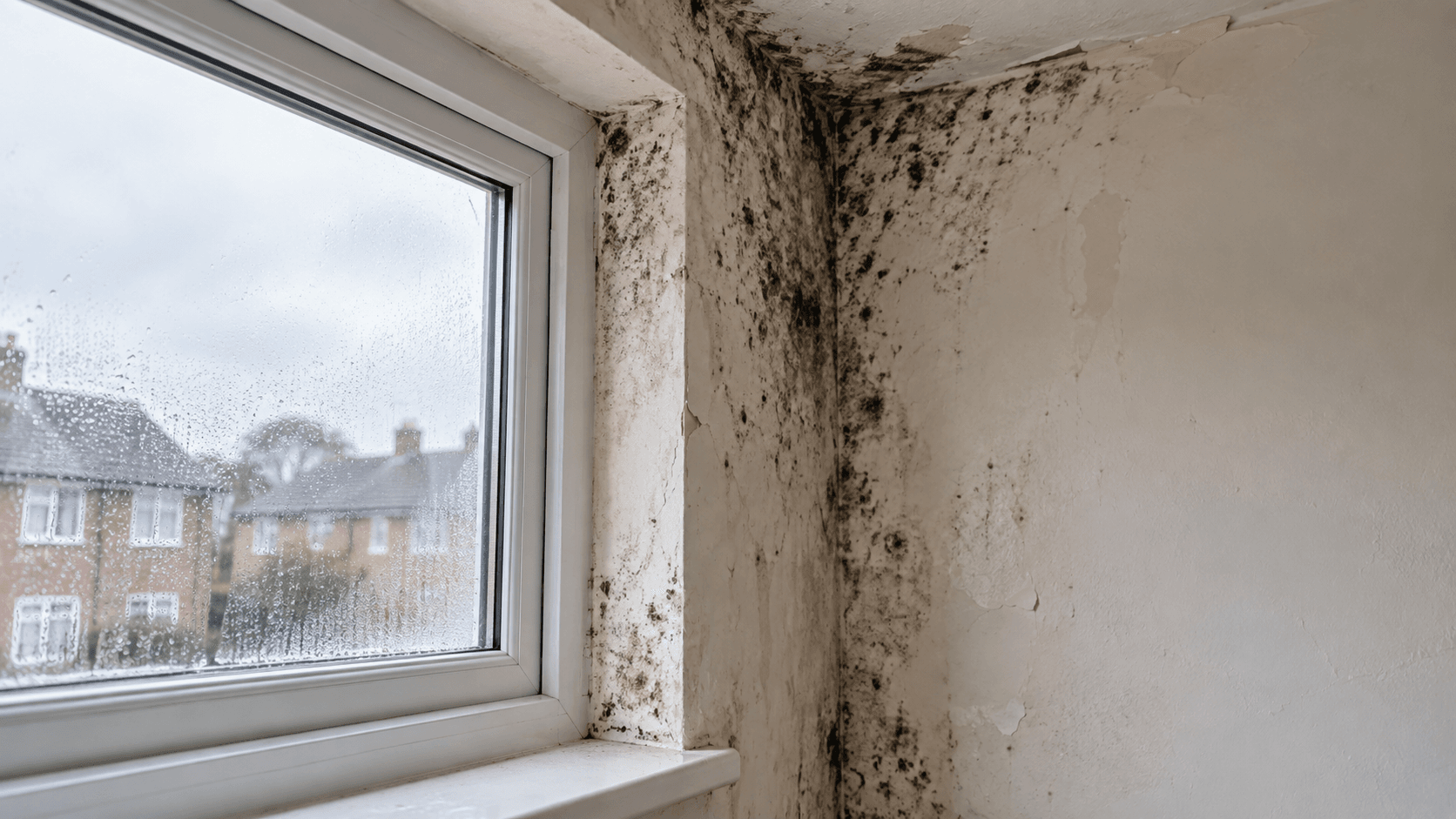
Damp and mould in social housing can leave residents asking the same questions: where is the moisture coming from, why does it keep returning, and who will put it right?
A useful response needs to answer all three. This guide explains common causes, practical steps for residents and the role of property investigations, with information about social housing in England.
What causes damp and mould in social housing?
Several problems can contribute, sometimes in the same home:
- Condensation: Moisture in the air settles on cold surfaces. Inadequate heating, insulation or ventilation can increase the risk.
- Water entering from outside: Defective roofs, walls or windows can allow rain into the building.
- Leaks: Plumbing and heating leaks can leave building materials persistently wet.
- Ground moisture: Rising damp can affect walls and floors in contact with the ground, but it is often misdiagnosed. Our guide to damp proof courses explains how they work and what can go wrong.
Damp and mould can affect health, including the airways and lungs. It should be taken seriously. Government guidance stresses the need to identify underlying causes rather than simply remove visible mould. Read the government’s damp and mould guidance.
Why can the problem persist in council and housing association homes?
The building itself is only part of the picture. How reports and repairs are handled also matters.
The Housing Ombudsman has identified recurring failures such as delayed action, poor communication and an overreliance on blaming residents’ lifestyles. Its damp and mould report calls for proactive management, better diagnosis and clear responsibility for resolving problems. Read the Housing Ombudsman’s findings.
For residents, a useful repair plan should answer:
- What has been investigated?
- What is believed to be causing the problem?
- What work will address that cause?
- Who is responsible, and when will it happen?
- How will the landlord check whether the work has succeeded?
These questions provide a clearer basis for follow-up than a record saying only that the affected wall has been treated.
Is condensation always the tenant’s fault?
No. Cooking, bathing and drying clothes produce moisture, but a home needs adequate ventilation and heating to manage everyday use. Building defects and cold surfaces must also be considered.
Advice about ventilation should be realistic for the household. It does not replace investigation or necessary repairs. Source: government guidance on damp, mould and condensation.
What should tenants do about damp and mould?
Report it promptly and keep a clear record. A practical message to your landlord could include:
I am reporting damp and mould in [rooms/locations]. I first noticed it on [date], and it has [spread/returned after treatment/continued after a repair]. I have attached dated photographs. Please confirm the investigation arrangements, any immediate safety measures and the next steps. Relevant household health or vulnerability information is [details].
Keep the response, appointment dates and details of completed work together. If the issue remains unresolved, ask for a written explanation of the next action rather than relying on verbal assurances.
The Housing Ombudsman emphasises clear communication, accurate records and a response that takes residents’ circumstances seriously. Source: Housing Ombudsman damp and mould report.
What does Awaab’s Law mean for damp and mould?
Awaab’s Law sets deadlines for covered social housing tenancies in England. Government tenant guidance explains that:
- Potential significant damp and mould hazards must be investigated within 10 working days of the landlord becoming aware.
- Confirmed significant hazards must be made safe within 5 working days after the investigation finishes.
- Emergency hazards must be investigated and made safe within 24 hours of awareness.
- Suitable alternative accommodation must be offered if the home cannot be made safe within the required timeframe.
Making a home safe may require further work to prevent recurrence. The rules also cover written updates and further repairs. The applicable response depends on the hazard and household circumstances.
If you are dissatisfied, use the landlord’s complaints process. You can take an unresolved complaint to the Housing Ombudsman after the landlord’s final response. Read the full government tenant guide to Awaab’s Law.
What should you ask before arranging a property inspection?
Explain whether you are a tenant reporting disrepair, a landlord investigating a recurring problem or a buyer considering a property. Ask the professional to confirm the inspection’s scope, limitations and whether specialist testing may be necessary.
For example, ask: “Will this inspection help establish the source of moisture, or will it identify visible concerns requiring further investigation?” Clear expectations help you choose the right service.
Speak to Sterlingworth Surveyors
Concerned about the condition of a property you own or plan to buy? Contact Sterlingworth Surveyors with the property details and a description of the issue to discuss whether a survey would be appropriate. If you are buying, Does damp reduce house value? explains how damp affects the price.
If you rent a social home, report damp and mould to your landlord promptly. You should not delay reporting while deciding whether to commission your own inspection.
Information checked on 23 September 2026. The Awaab’s Law section concerns social housing in England; consult the linked official guidance for the full requirements.